An Introduction to Gaelic Sports
for anyone who’s irish on st. patrick’s day
Like a lot of Irish descendants, my grandparents came to this country over a hundred years ago. We were proud of our heritage, but we lived in a community of many different backgrounds and ethnicities. About the only Irish thing we did each year was wear green on St. Patrick’s Day.
The sports we played were baseball, football, and basketball. American sports. There’s nothing wrong with that, of course. Here in the Bay Area, the Irish are as passionate about the Giants, 49ers, and Warriors as anyone.
But somewhere along the way, I discovered the sports native to Ireland — especially hurling, camogie, and Gaelic football. These are fast, physical, skillful games that need to be seen to be fully appreciated. So I decided to visit Páirc na nGael on Treasure Island and see them for myself.
What I discovered is that Irish sports are a little like this and a little like that, but totally unique. Hurling and camogie are a little like lacrosse and a little like baseball. Gaelic football is a little like soccer and a little like rugby. But not really. They aren’t just variations of other sports; they have a completely different set of rules and a culture that’s very different from the way Americans experience athletics.
Here are seven reasons why I love Irish sports (and you should, too).
Irish Identity

Baseball, hot dogs, and apple pie. American sports are tied to our identity. The Super Bowl is virtually a national holiday.
Ireland’s sports have an even deeper connection. When the British ruled Ireland, native cultural expressions, including traditional games, were banned. The formation of the Gaelic Athletic Association (GAA) was not just about starting a sports league; it was part of a broader cultural revival. Many of those involved in establishing the GAA also fought for Irish independence, and many clubs still carry the names of Irish revolutionaries.
Today, Gaelic games are played around the world. They’re open to players of all backgrounds, yet they remain inseparable from Irish identity. To play them is, in some sense, to participate in a living piece of cultural history.
Community

In American sports, teams can change from season to season. Youth players move between leagues and travel programs. Professional sports are commercial enterprises. Professional players move from team to team.
In Gaelic sports, players represent their local club, often for life. The GAA is structured around parish and community. Generations of families play for the same club.
This doesn’t mean American sports lack community spirit, of course not. But in Gaelic games, community isn’t a branding strategy or an outreach initiative, it’s the organizing principle.
You can even see this reflected in the uniforms.
Uniform Numbers

In American sports, great players are known by their jersey numbers. The number follows them from team to team. Legendary players have their numbers retired in ceremonies at the end of their careers.
In Gaelic sports, a player might wear a different number each game because jersey numbers correspond to a position on the pitch. The goalkeeper wears #1, all the way up to #15 on the forward line. #16 and above is a substitution.
Players don’t wear names on the back of their jerseys, so there’s no retiring them.
In Gaelic sports, your uniform number represents your position on the field, not your brand.
The Pitch

On television, an American football field looks huge. After seeing a few games at Páirc na nGael, it feels tiny by comparison.
Páirc na nGael measures about 159 x 98 yards (145 x 90 meters). The size of the pitch shapes the game. In hurling and camogie, players can strike a sliotar (a ball about the size of a baseball) well over 80 or even 100 yards.
The large, open pitch demands endurance, speed, and agility. Páirc na nGael is the only regulation-sized pitch west of the Mississippi, so when players travel to San Francisco for matches, some admit they weren’t prepared for the amount of running and endurance that a regulation-sized field requires.
The Scoreboard
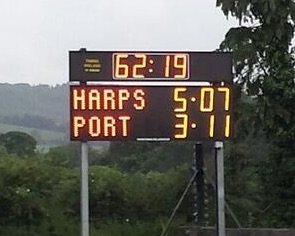
One of the quirky features I love about Gaelic sports is the scorekeeping.
Like many American sports, there is more than one way to score. A shot over the H-shaped crossbar is worth one point. A ball past the goalkeeper and into the net counts as three.
In most sports, points are simply added to the total. Logical, right?. In Gaelic sports, goals and points are tallied separately. If the scoreboard shows 2–21 to 3-18, it means the first team has scored 2 goals, worth three points each, plus 21 points over the bar. The second team has scored 3 goals plus 18 points. Do the math, the game is tied at 27 all.
Now do this in a close game when the clock is ticking down, every point counts, and you’re not sure who’s ahead. I get so nervous that I find myself calculating and recalculating the score, and then doing it again just to make sure I got it right.
It’s one of the small things that makes these sports fun.
Integrity
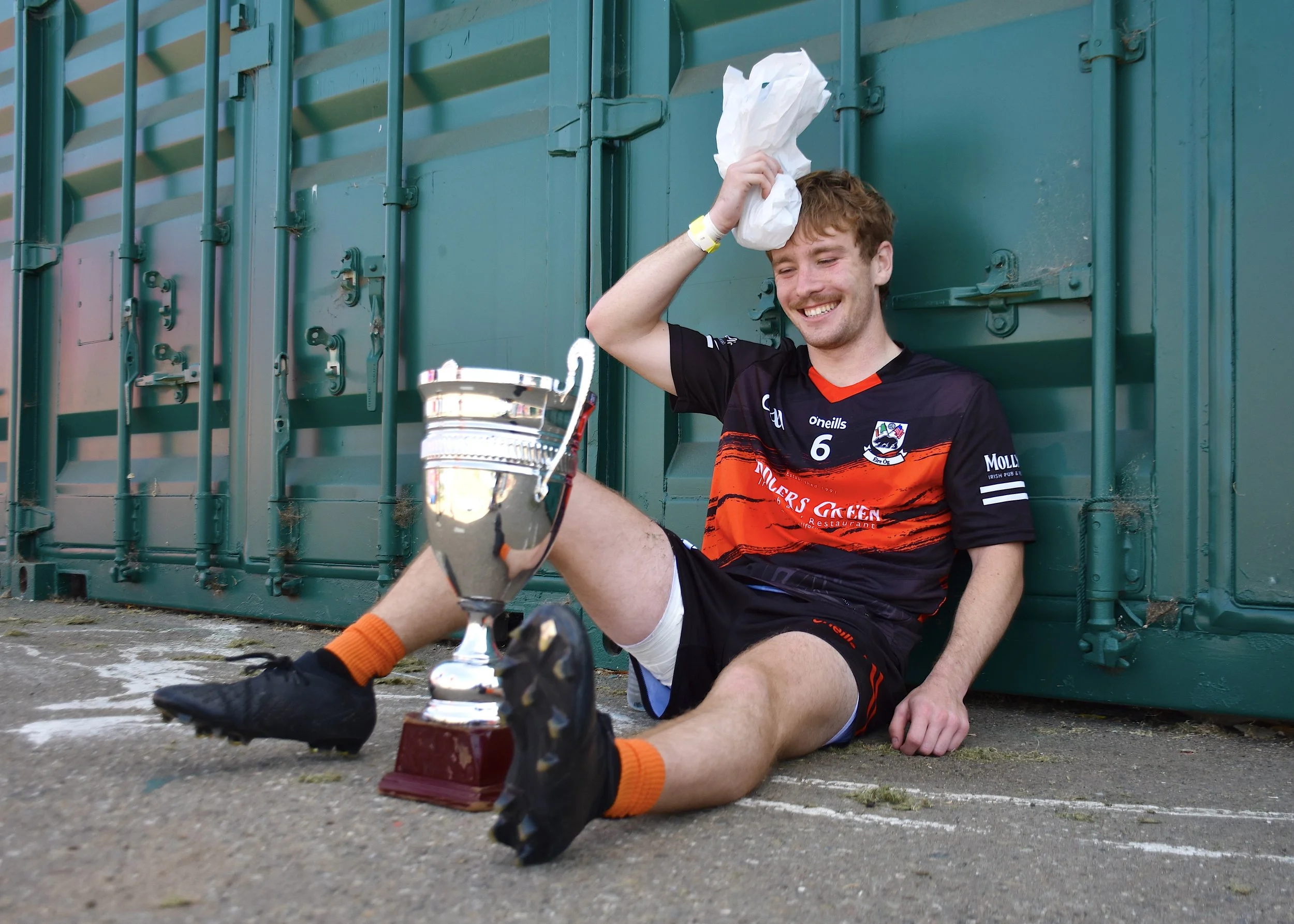
Gaelic sports are physical, high-contact games. Injuries happen. Gaelic football players wear no pads, and helmets weren’t required for hurling until 2010.
There’s an expectation of grit and toughness, but there’s also an expectation of honesty. I won’t say flopping never happens, but I’ve never seen it. When a player goes down holding a leg or an arm and the medical staff rushes onto the field, it’s not theater.
Playing through contact is part of the culture. So is getting up after a hard hit. The game demands resilience, but it also assumes integrity — professionalism without being professional.
proudly amateur

I saved this one for last because it’s the hardest for Americans to understand.
An American will occasionally tell me that they saw a professional hurling or Gaelic football match when they visited Ireland.
I have to explain that they couldn’t have. There’s no such thing as professional Gaelic sports.
An athlete can play in front of 80,000 screaming fans in Dublin’s Croke Park, one of the largest stadiums in Europe, they can win the highest trophy in hurling, camogie, or Gaelic football, and after the celebrations and the parade, go back to their 9-to-5 job — because they’re not paid to play the game.
Imagine if American sports reporters never had to write about contracts or salary caps or trades because they didn’t exist. Imagine if Steph Curry, Joe Montana, and Barry Bonds all played for nothing but the love of the game and pride in their community.
This St. Patrick’s Day, we’ll wear green, we’ll go to the parade, we’ll celebrate Irish music, literature, and dance.
If you’re Irish on St. Patrick’s Day, celebrate Irish sports, too. They’re fast, skillful, rooted in community, and played here in San Francisco on a small patch of Ireland on San Francisco Bay called Páirc na nGael.