

The Irish Who Built the Bay
From the Gold Rush to the present day, some of the sons and daughters of Ireland who shaped San Francisco into one of the world's great cities
If you're Irish or of Irish descent, you belong in the Bay Area. It was the Irish who helped to build it. Long before the Golden Gate Bridge rose from the fog, long before the cable cars climbed the hills, long before San Francisco became a byword for ambition, culture, and possibility; Irish men and women were here. Shaped by famine and hardship, they poured their heritage into the city's foundations.
From the surveyor who drew the very streets, to the engineers who brought water to half a million people, to the educators, nurses, bankers, labour organizers, and civic leaders who built every institution this city holds dear, their names are etched into the geography of San Francisco itself. The city we love today is, in no small part, an Irish creation.
This is their story (or at least some of them.)
The Founders: Drawing the City from Nothing
1828–1869
Timothy Murphy
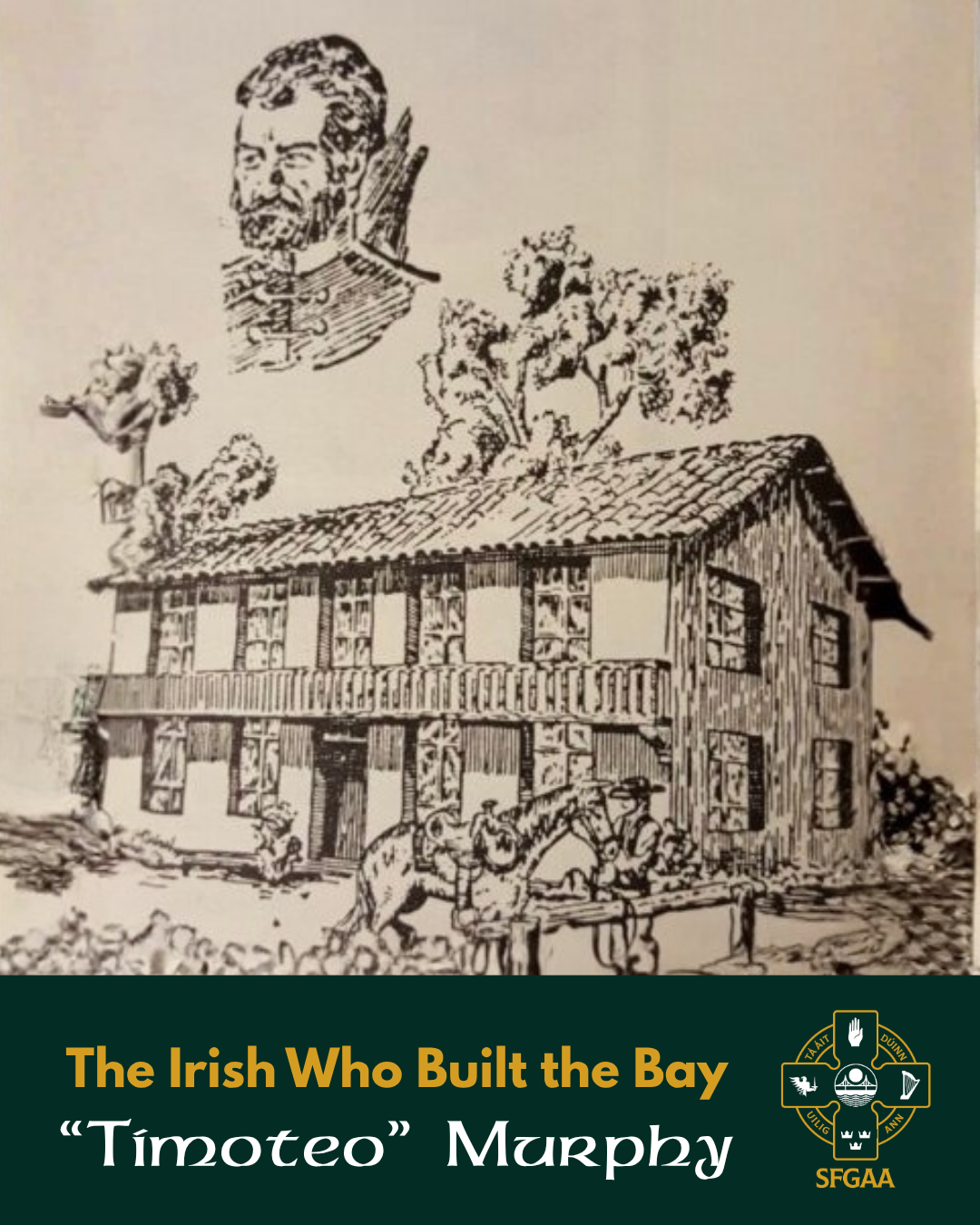
b. 1800 — d. 17 August 1853 | Co. Wexford, Ireland
Rancher · Pioneer · Alcalde of San Rafael · Philanthropist · First Irishman to Shape the Bay Area
Before the Gold Rush, before San Francisco was a city, there was Timothy Murphy. Born in County Wexford around 1800, Murphy left Ireland as a young man and found commercial work in Dublin before departing for Lima, Peru in the 1820s. By 1828 he had arrived in California, one of the first Irishmen to set foot in the Bay Area, and began trapping sea otters in the waters surrounding the Marin Peninsula, amassing considerable wealth from their valuable pelts.
Murphy secured a vast land grant, Rancho San Pedro, Santa Margarita y Las Gallinas, encompassing much of present-day Marin County. He built a two-storey hacienda in what is now San Rafael and served as the settlement's Justice of the Peace and later its Alcalde (Mayor), making him the first Irish-born officeholder in the Bay Area. He helped organize the beef cattle industry that fed San Francisco and became known throughout the region for his extraordinary generosity. His ranch house served as a courthouse after his death, and he donated land for schools and orphanages.
Murphy and his great friend Jasper O'Farrell co-donated a lot in San Francisco's Happy Valley for the construction of an asylum for children orphaned by the 1850 cholera epidemic. Herbert Howe Bancroft, the great historian of California, described him simply as 'a liberal giver to several Catholic institutions.'
Legacy: Murphy's rancho forms the backbone of modern Marin County. San Rafael, the county seat, grew around his hacienda. He was the first Irishman to leave an indelible mark on the Bay Area.
Jasper O'Farrell
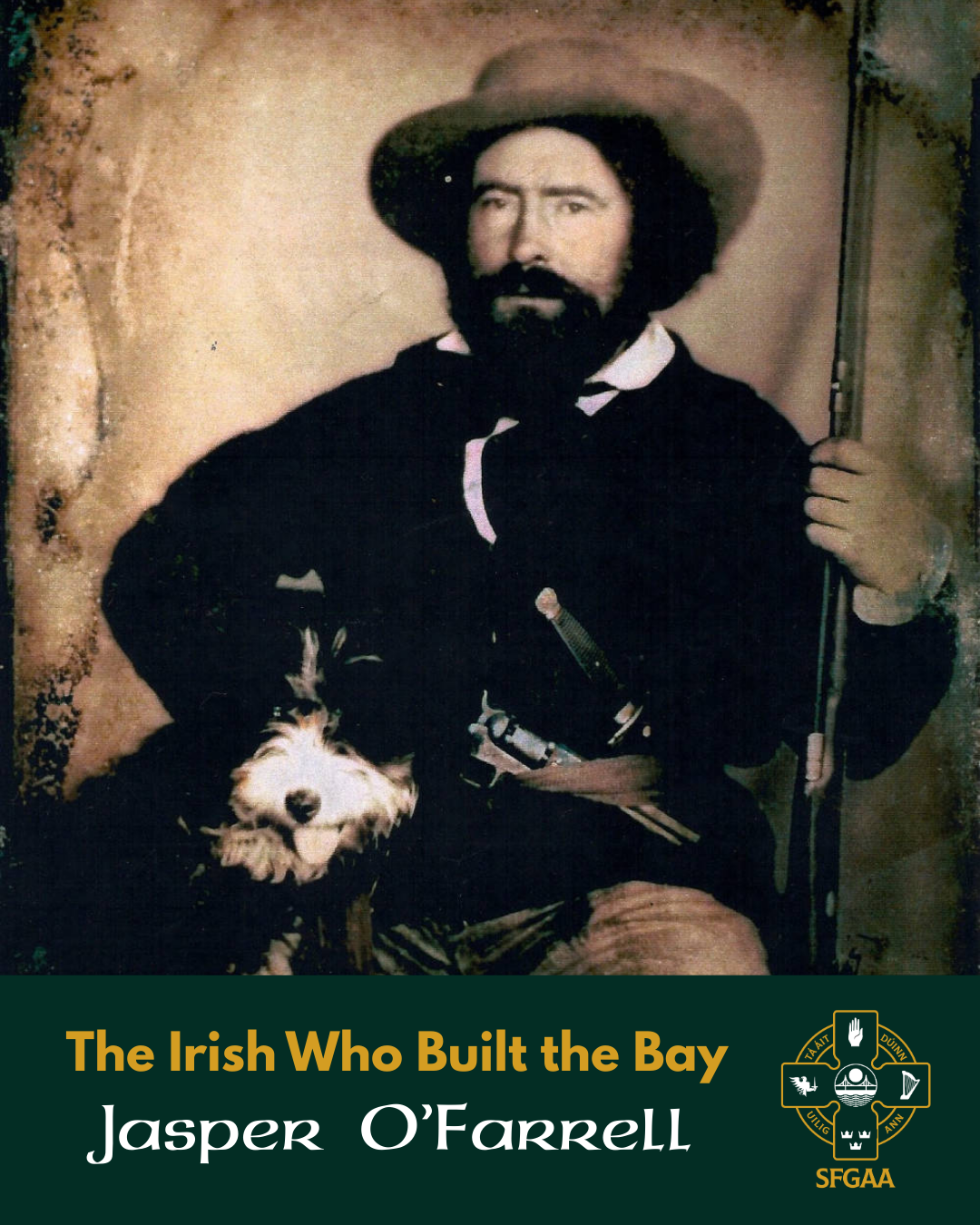
b. 1817 — d. 16 November 1875 | Co. Wexford, Ireland
First Surveyor of San Francisco · Designer of Market Street · State Senator
Before San Francisco had streets, it had Jasper O'Farrell. Born in County Wexford and educated in Dublin as a civil engineer, O'Farrell arrived in what was then the tiny Mexican outpost of Yerba Buena in 1843. When American forces took control, the new military mayor commissioned O'Farrell to survey the settlement. He corrected a previous survey that was 2½ degrees off true right angles and laid out the entire eastern half of the San Francisco peninsula in a precise grid.
O'Farrell's masterstroke was Market Street, the sweeping diagonal grand promenade that sliced across the rectangular grid, creating the iconic triangular blocks of downtown San Francisco. Today it remains one of the most recognizable thoroughfares in America. He went on to survey the Sacramento Valley, Napa, Petaluma, and Benicia. He served as a California State Senator and named his Sonoma estate 'Analy' after his ancestral lands in Ireland.
Legacy: O'Farrell Street in San Francisco is named in his honour. Without his 1847 survey, the city's street grid, the very bones of San Francisco, would not exist.
Frank McCoppin
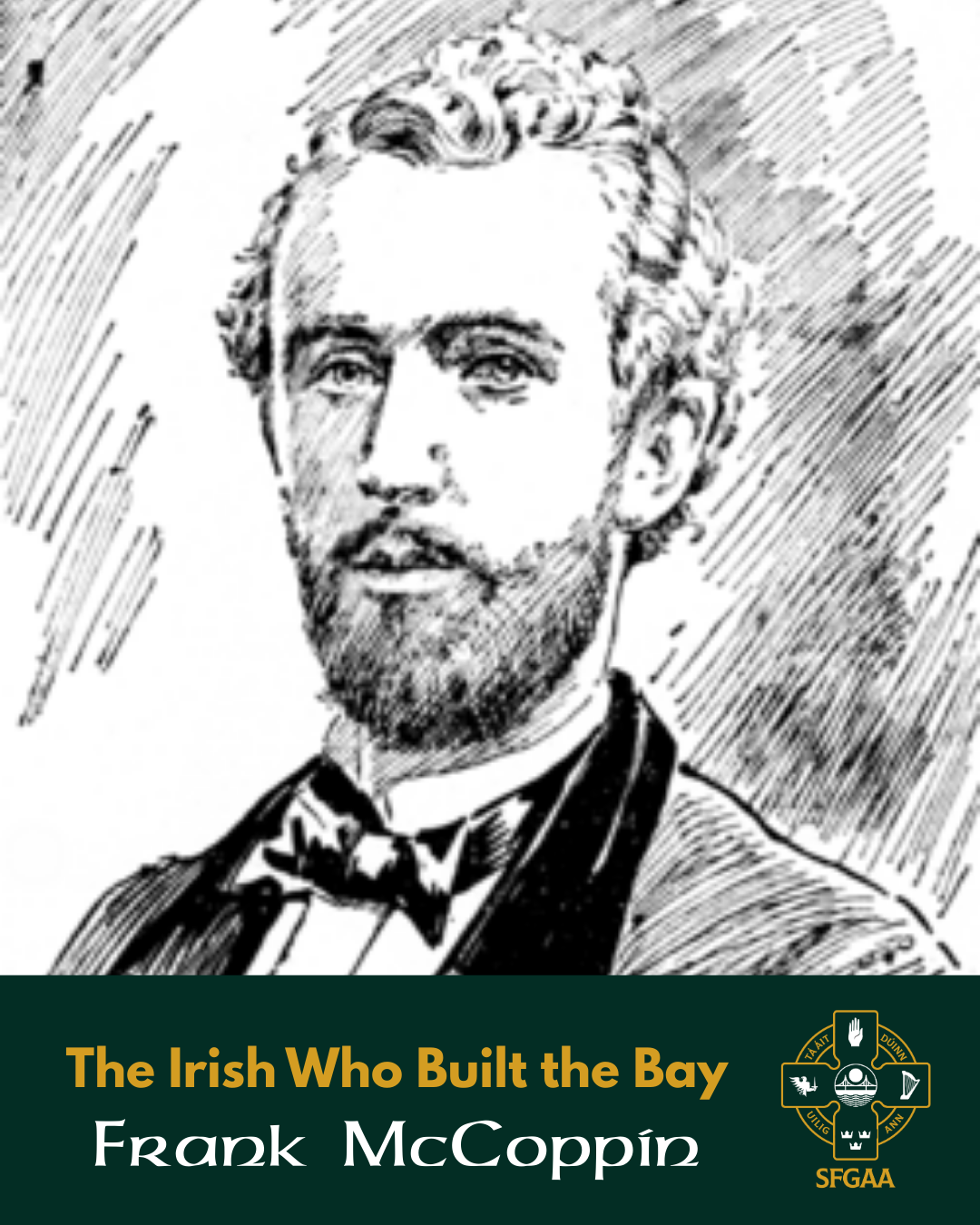
b. 4 July 1834 — d. 26 May 1897 | Co. Longford, Ireland
11th Mayor of San Francisco (1867–1869) · America's First Irish-Born Mayor · Father of Golden Gate Park
Born in Clonterm, County Longford, Frank McCoppin came to America with his family during the Great Hunger in 1853. He moved to San Francisco in 1858 and quickly rose: within two years he was elected to the Board of Supervisors, having distinguished himself as superintendent of the Market Street Railway, the city's first streetcar line.
In 1867, McCoppin was elected the 11th Mayor of San Francisco, the first Irish-born mayor of any major American city, and the first foreign-born mayor of San Francisco. His defining act came on 14 January 1868: he and the Board of Supervisors approved the plan for Golden Gate Park, today one of the most beloved urban parks in the world, larger than New York's Central Park. After his mayoral term, he served in the California State Senate and as San Francisco's Postmaster.
Legacy: McCoppin Square, McCoppin Street, and Frank McCoppin Elementary School bear his name. Golden Gate Park, his greatest gift to the city, draws over 24 million visitors each year.
The Silver Kings, Bankers & Builders: Financing the West
1849–1898
Eugene Kelly
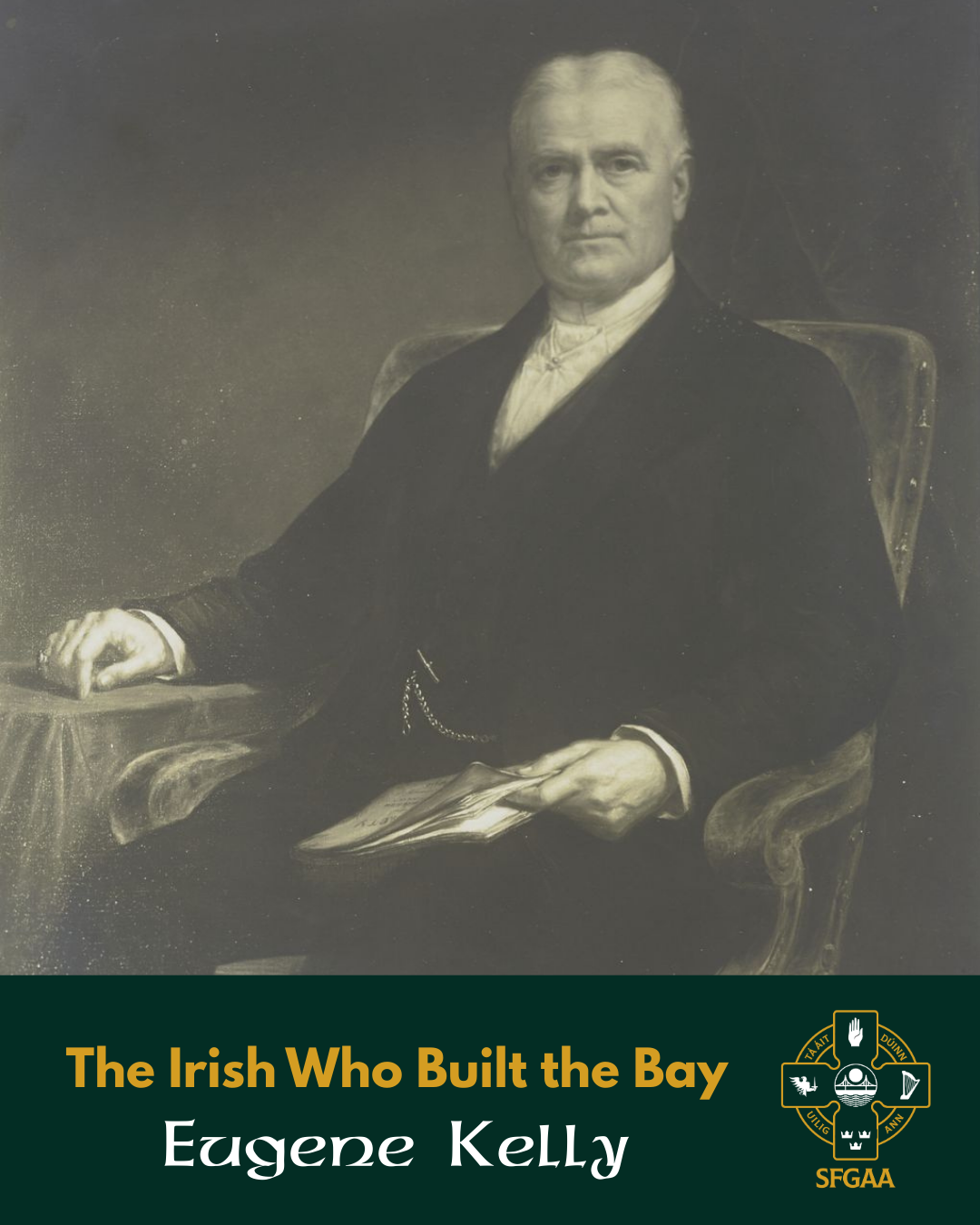
b. 25 November 1808 — d. 19 December 1894 | Co. Tyrone, Ireland (village of Trillick)
Merchant · Banker · Co-founder of the Nevada Bank of San Francisco · Philanthropist
Born in Trillick, County Tyrone, Eugene Kelly emigrated to the United States at twenty-four and worked his way up from a clerk's desk in New York to the merchant partnerships of the frontier. When the California Gold Rush began, he saw the opportunity and arrived in San Francisco in late 1849, opening a mercantile establishment in partnership with Joseph A. Donohoe and others.
After a decade of commerce, Kelly helped found the Pacific Coast banking house of Donohoe, Ralston & Co., and established the firm of Eugene Kelly & Co. in New York. He served as a director of the National Park Bank, the Bank of New York, and the Equitable Life Assurance Society. He was one of the founding supporters of the Catholic University of America, a patron of the American Museum of Natural History and the Metropolitan Museum of Art, and was eulogized at St. Patrick's Cathedral as a man whose 'name is inscribed in every hearthstone in Ireland.'
Legacy: Kelly's banking activities on the Pacific Coast helped finance the commercial infrastructure that transformed San Francisco from a Gold Rush boomtown into a major city.
James Graham Fair
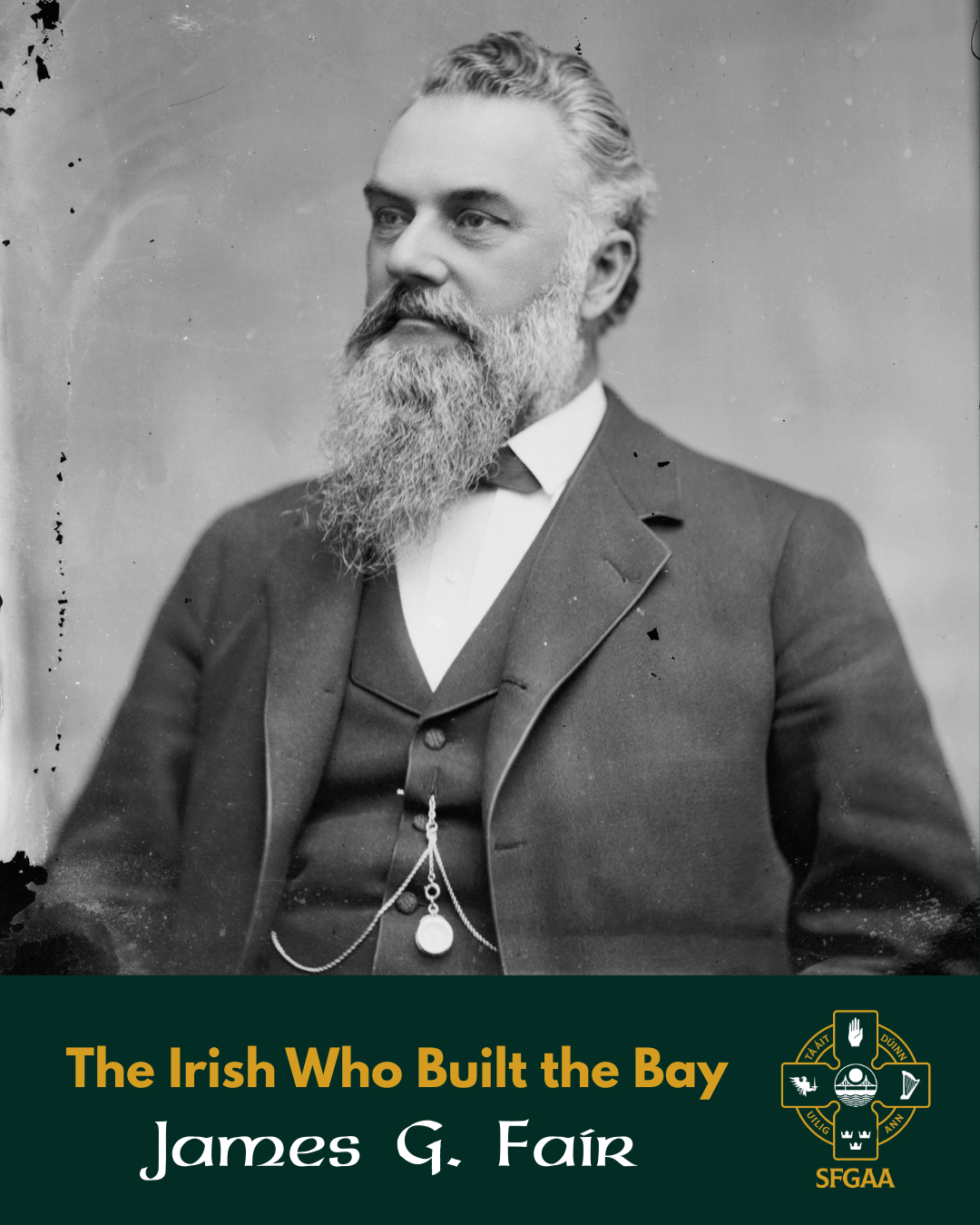
b. 3 December 1831 — d. 28 December 1894 | Clogher, Co. Tyrone, Ireland
Mining Engineer · One of the Four Bonanza Kings · U.S. Senator for Nevada (1881–1887) · San Francisco Real Estate Magnate
Born in Clogher, County Tyrone, James G. Fair emigrated with his father to Illinois at age twelve. He moved to California during the Gold Rush in 1850, prospecting the Feather River before shifting his attention to Nevada, where he became one of the most skilled mine superintendents on the Comstock Lode.
In partnership with John Mackay, James Flood, and William O'Brien, all of Irish descent, Fair helped orchestrate the discovery of the Big Bonanza in 1873, the most spectacular silver strike in history. His private fortune grew to some $50 million. After serving a term in the U.S. Senate (1881–1887), Fair returned to San Francisco and invested heavily in real estate and manufacturing. He owned the Nevada Bank of San Francisco alongside Mackay. He earned the nickname 'Slippery Jim' for his sharp business practices, but his wealth was formidable: he left $40 million in trust to his children.
Legacy: Fair Avenue in San Francisco's Bernal Heights neighbourhood bears his name. The Fairmont Hotel on Nob Hill, built on land his family owned, was named after him by his daughters.
The Healers & Educators: Building a Humane City
1854–1898
Mother Mary Baptist Russell
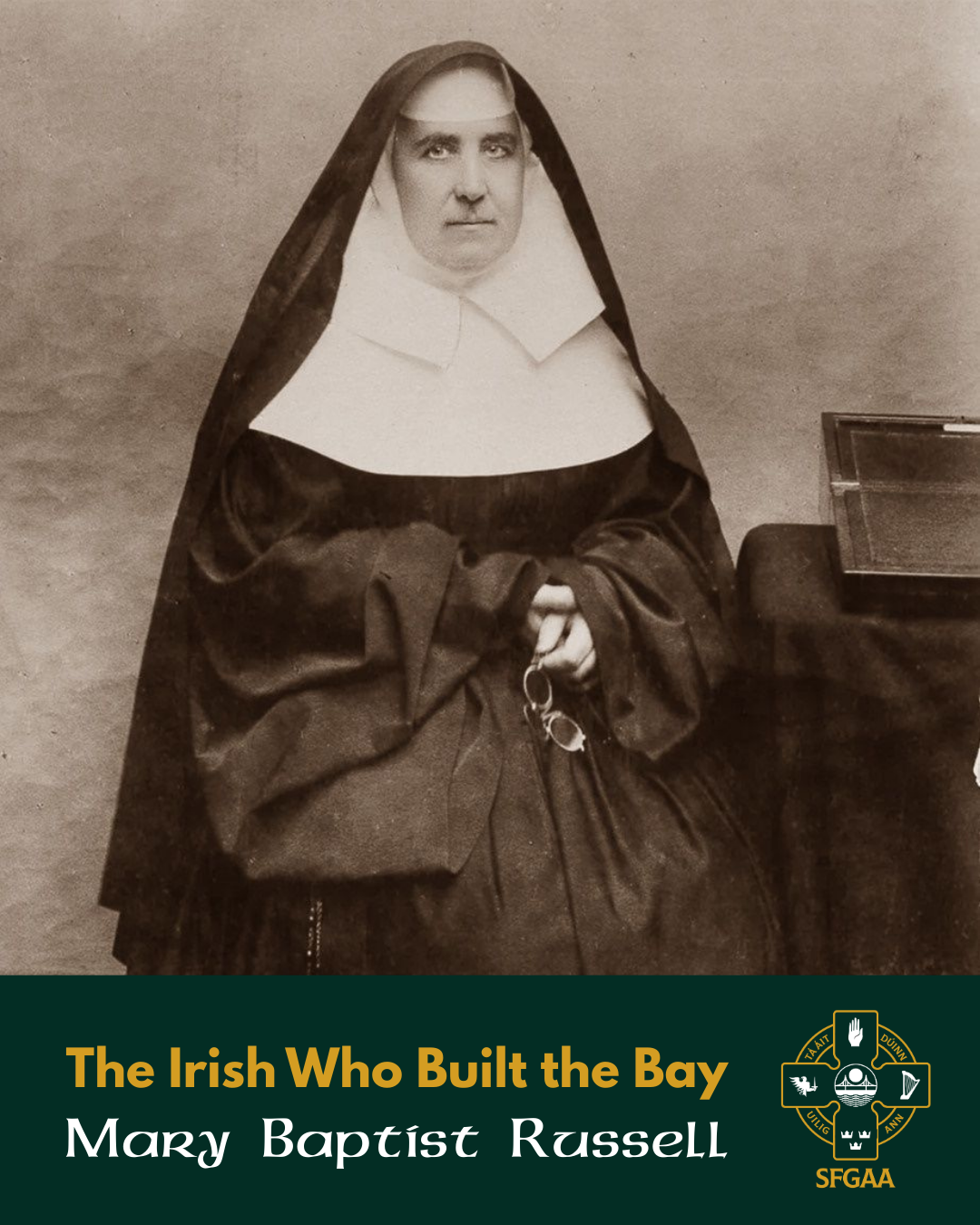
b. 18 April 1829 — d. 6 August 1898 | Newry, Co. Down, Ireland
Nun · Founder of St. Mary's Hospital · Educator · Pioneer of Social Services on the Pacific Coast
Born Katherine Russell in Newry, County Down in 1829, she entered the Sisters of Mercy in Kinsale, County Cork in 1848. At just twenty-five, the youngest professed sister in her group, she was chosen by Archbishop Alemany to lead eight nuns from Ireland to San Francisco. They arrived on 8 December 1854, the Feast of the Immaculate Conception, and immediately plunged into work.
When cholera swept San Francisco in 1855, Mother Mary Baptist volunteered her sisters as nurses at the public hospital so effectively that city officials signed a contract for the Sisters of Mercy to staff all public hospitals in San Francisco. In 1857 she founded St. Mary's Hospital, the first Catholic hospital on the entire West Coast. She established a House of Mercy for unemployed women (1855), a Magdalen Asylum for women seeking to leave prostitution (1861), a home for the aged and infirm (1872), and a network of Catholic schools across California. She visited prisoners at San Quentin and nursed the sick at home.
The San Francisco Bulletin, upon her death in 1898, called her 'the best-known charitable worker on the Pacific Coast.' She had spent forty-four years building institutions that served the city's most vulnerable people.
Legacy: St. Mary's Medical Center in San Francisco, the direct descendant of her 1857 hospital, continues to operate to this day. Mary Baptist Russell is being considered for canonization by the Catholic Church.
Kate Kennedy
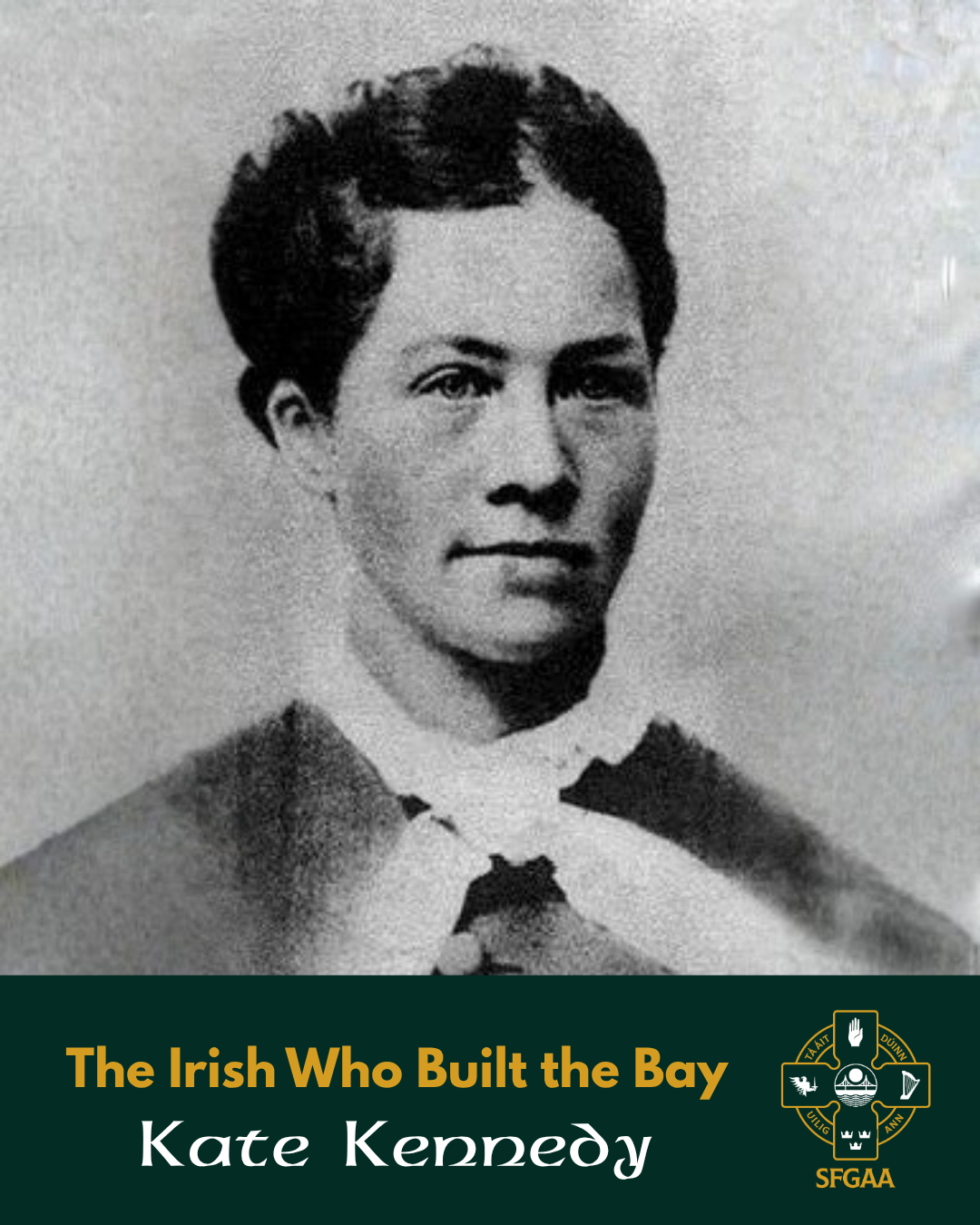
b. 31 May 1827 — d. 18 March 1890 | Near Tara Hill, Co. Meath, Ireland
Educator · Principal · Labour Leader · Suffragist · Pioneer of Equal Pay in America
Kate Kennedy arrived in San Francisco in 1856, a woman forged by the Great Famine and the injustices of colonial Ireland. She found her calling in the city's public schools, rising to principal of the North Cosmopolitan Grammar School. But she was never content merely to teach, she was a warrior for justice.
When Kennedy discovered her salary of $100 per month was $50 less than male colleagues doing the same work, she launched a campaign that changed American history. Her advocacy led the California Legislature to pass the first equal pay for equal work law for teachers in the nation in 1874, a victory celebrated by Elizabeth Cady Stanton and Susan B. Anthony, who visited her school personally.
In 1886, Kennedy became the first woman in California to run for statewide office, standing for State Superintendent of Public Instruction on the Labour Party ticket. Her final legal battle, fighting wrongful dismissal, established the precedent of teacher tenure in California, upheld by the State Supreme Court just days before her death. She was born the year before the English ban on educating the Irish was lifted. She died having spent her life ensuring no one else would be denied the education, the wages, or the dignity they deserved.
Legacy: Kate Kennedy Middle School in San Francisco bears her name. Her equal pay victory of 1874 is one of the earliest equal pay laws in American history.
The Advocate: OrganiZing the Workers
1841–1925
Frank Roney
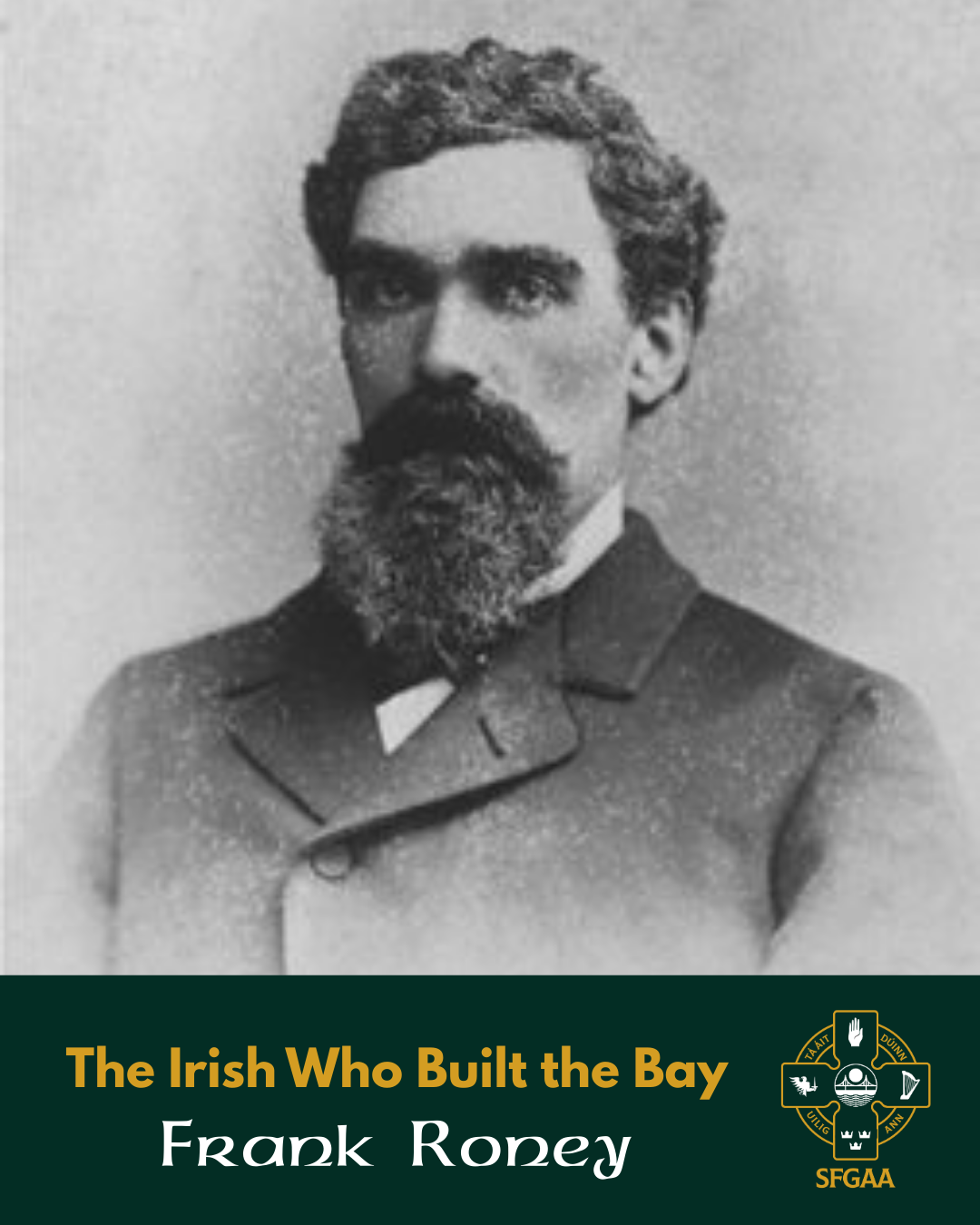
b. 1841 — d. 1925 | Belfast, Ireland
Iron Moulder · Fenian · Father of the San Francisco Labor Movement · Founder of the Trades Assembly
Frank Roney was born in Belfast in 1841 and apprenticed in its foundries, where he became steeped in the twin traditions of Irish nationalism and labour radicalism. He was a Fenian revolutionary, imprisoned in Mountjoy Prison for his activities, before emigrating first to the United States and ultimately to San Francisco.
In San Francisco, Roney became the dominant figure in the city's labour movement from 1881 to 1886. He founded and led the Representative Assembly of Trades and Labor Unions of the Pacific Coast, the forerunner of the San Francisco Labor Council, and organized the city's iron workers in a landmark 1886 strike. He wrote a remarkable autobiography, 'Frank Roney: Irish Rebel and California Labor Leader,' published by the University of California Press, which stands as one of the most vivid primary documents of the American labour movement. His conviction that Irish republican ideals and workers' rights were the same struggle made him a bridge between two worlds.
Legacy: Roney's Federated Trades Council was the institutional ancestor of the San Francisco Labor Council, which continues to represent working people across the Bay Area to this day.
